
The term “slot gacor” is widely used on the internet to describe slot games that are believed to be “frequently winning” or “hot.”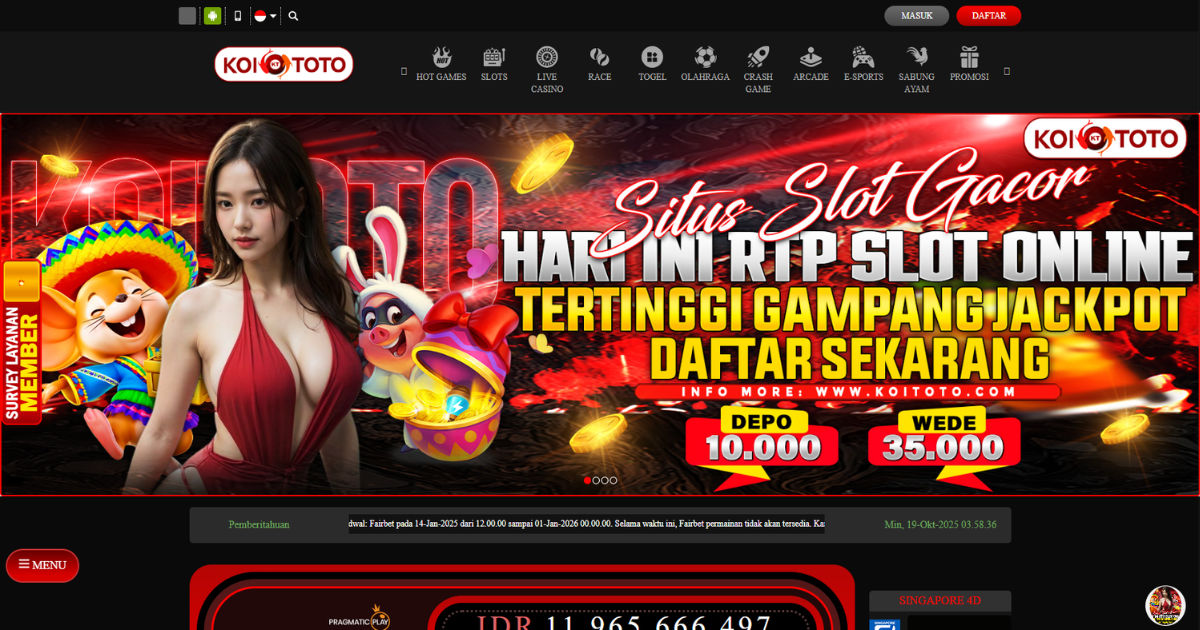
Beginners often encounter this phrase on social media, forums, or promotional content that suggests certain games or platforms have better winning chances at specific times.
One name that sometimes appears in such discussions is koitoto, often mentioned in promotional contexts related to online slot gaming communities. However, it is important for beginners to understand that these claims are not based on verifiable game mechanics.
Before believing any “winning pattern” or “hot slot” advice, beginners should understand how slot games truly work, what randomness means in this context, and why many popular beliefs are misleading.
What “Slot Gacor” Really Means
The Meaning Behind the Term
“Slot gacor” is a slang phrase that originated in online gambling communities. “Gacor” loosely means “active” or “loud” in Indonesian slang, and in this context, it refers to a slot game that is perceived to be paying out frequently.
In reality, this is a perception, not a confirmed feature of any legitimate slot system.
Why People Use the Term
Beginners are often attracted to the idea because:
- It suggests easy winnings
- It feels like a “secret strategy”
- It is widely shared in online groups
- It creates hope of predicting outcomes
However, slot outcomes are not designed to be predictable.
How Slot Games Actually Work
Random Number Generator (RNG)
All modern slot games use a system called RNG (Random Number Generator). This system ensures that:
- Every spin is independent
- Past results do not affect future outcomes
- No timing or pattern can predict results
This means there is no such thing as a “hot” or “cold” machine in a technical sense.
Return to Player (RTP)
Another important concept is RTP (Return to Player), which represents the long-term statistical return of a game.
For example:
- A 96% RTP means that over a very large number of spins, the game returns 96% of total wagers on average
- It does NOT mean you will win 96% of the time
This is a common misunderstanding among beginners.
Why the Idea of “Slot Gacor” Feels Convincing
Psychological Factors
Humans naturally look for patterns, even in random events. This leads to several cognitive biases:
Pattern Recognition Bias
Players believe they see cycles or “hot streaks” even when outcomes are random.
Gambler’s Fallacy
The belief that a win is “due” after losses.
Confirmation Bias
People remember wins more than losses, reinforcing the illusion.
Social Media Influence
Online communities often share:
- Screenshots of wins
- Claims of “winning times”
- Lists of “recommended slots”
These posts rarely show the full picture, especially losses, which are far more common.
Common Beginner Misunderstandings
“Certain Times Are Luckier”
There is no evidence that specific hours or days change outcomes in RNG-based systems. Each spin remains independent.
“Some Games Are Easier to Win”
While games may vary in volatility (risk level), they are still random. Higher volatility does not guarantee more frequent wins.
“Patterns Can Be Tracked”
Slots do not follow visible or learnable patterns. Any perceived pattern is coincidental.
The Role of Marketing and Online Claims
Promotional Language
Many websites and communities use attractive terms to draw attention, such as:
- “Easy win slots”
- “Hot machines”
- “Guaranteed patterns”
These are marketing phrases, not technical guarantees.
Why Beginners Should Be Careful
Beginners are especially vulnerable because:
- They lack experience with randomness
- They trust community advice easily
- They may chase losses after believing in patterns
This can lead to unrealistic expectations.
Responsible Understanding of Slot Games
Treating It as Entertainment
If someone chooses to engage with such games, the safest mindset is to treat them purely as entertainment, not as income or strategy-based systems.
Setting Limits
Responsible behavior includes:
- Setting strict time limits
- Setting spending limits
- Avoiding emotional decision-making
Knowing When to Stop
A key skill is recognizing when activity stops being enjoyable and becomes stressful or compulsive.
Why “Winning Systems” Don’t Work
Independent Outcomes
Each spin is independent, meaning:
- No memory of past spins
- No influence from previous results
- No “adjustment period” for wins or losses
House Edge
All games are designed with a built-in advantage for the operator over time. This ensures long-term profitability for the system.
Beginner Safety Tips
Avoid Believing “Guaranteed Win” Claims
No system can guarantee consistent winnings in a random game.
Be Careful with Online Groups
Some communities may exaggerate results or share misleading advice.
Don’t Rely on Strategies for Prediction
Since outcomes are random, prediction-based strategies are not reliable.
Common Emotional Traps
Chasing Losses
Trying to recover losses often leads to worse outcomes.
Overconfidence After Wins
A few early wins may create false confidence in patterns.
Frustration Cycles
Repeated losses can cause emotional decision-making instead of rational thinking.
Why Education Matters for Beginners
Understanding randomness and probability helps beginners:
- Avoid false beliefs
- Make informed decisions
- Recognize misleading content
- Reduce emotional decision-making
Knowledge is the strongest protection against misinformation in this space.
Conclusion
The idea of “slot gacor” is mostly based on perception, storytelling, and psychological bias rather than verifiable game mechanics. While it may feel convincing due to shared experiences or selective examples, the underlying systems in modern slot games rely on randomness through RNG technology.
For beginners, the most important lesson is to separate entertainment from expectation. Believing in patterns or “lucky systems” can lead to misunderstanding how probability works and may create unrealistic expectations.
A responsible mindset focuses on awareness, limits, and understanding that outcomes are independent and unpredictable. Instead of searching for winning patterns, beginners benefit more from learning how randomness, probability, and cognitive bias influence decision-making.
In short, the key takeaway is simple: what feels predictable is often just randomness in disguise.